


Understanding and Supporting Your Child’s Mental Health
Mental health is at the core of human interaction and is the foundation from which individuals navigate their world.
By Katelyn Bentel, MSW, LSW
Social Worker at Easterseals DuPage & Fox Valley

Photo by Alexander Dummer from Pexels.com
Mental health varies widely, making it difficult to understand across individuals and even day to day. We all respond differently!
In healthy individuals, the upstairs brain (prefrontal cortex) is fully developed by the age of 25. This part of the brain is responsible for executive functioning skills (e.g., decision-making/impulse control, problem-solving, working memory, attention, emotional regulation, etc.). Adults can recognize emotions and reflect on distress, which may lead them to seek additional support when needed.
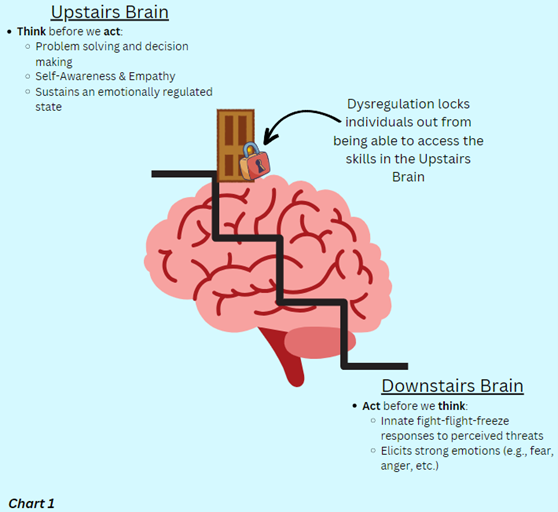
Children primarily rely on the downstairs brain, which controls basic functions and fight‑flight‑freeze responses during stress.
Because the upstairs brain is underdeveloped, children struggle to regulate emotions and communicate mental health needs, requiring extra support.
Signs that your child may need additional support:
- Aggression/increased fighting
- Increased emotional sensitivity
- Frequent temper tantrums/uncharacteristic mood swings
- Stomachaches, headaches, physical complaints
- Loss of interest in previously enjoyed activities/self-isolation
- Inattentiveness
- Difficulty separating from caregivers
- Noticeable change in appetite
- Noticeable decrease in sleep quality
- Lack of self-confidence
These signs can temporarily appear during a child’s typical developmental process as they learn to adjust to inevitable stressors in their environment. However, these signs can also evolve into maladaptive coping skills—negatively impacting the child’s overall mental health. It is important to take notice of the presence of these signs, their frequency, duration, and impact on the child’s ability to function daily.
Understanding why your child is responding this way
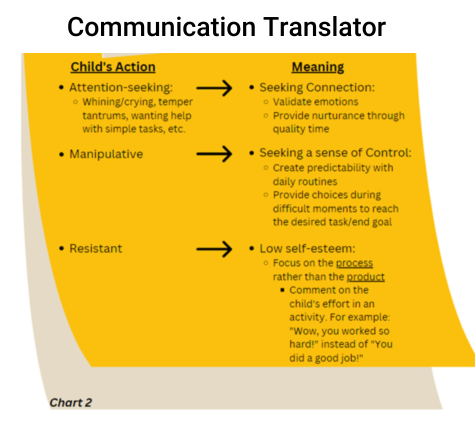
Sometimes a child’s response to stress is misinterpreted as “bad behaviors.” A healthier and more sensitive way to interpret these responses is to reframe “bad behaviors” as communication in an attempt to express an unmet need.
For example, a child may be acting in ways that appear “attention-seeking” (e.g., whining/crying, temper tantrums, wanting help with simple tasks, etc.) when, in reality, they are having difficulty communicating that they are trying to seek out connection.
How to respond with Connection:

Photo from Nicola Barts from Pexels.com
- Nurturance
· Respect and acknowledge child’s feelings
· Talk and act so child feels seen and safe
· Be Gentle
· Offer affection (verbal or physical)
· Encourage!
· Allow for mistakes
· Be consistent with developmentally appropriate rules and expectations
- Validation of emotion
· Respect and acknowledge child’s feelings
- Shared quality time with caregiver
· “Special Time,” just you and child
· Include child in your activities
· PLAY!
Children may be labeled “manipulative” when they are actually seeking a sense of control. Children are reliant on their caregivers to have their needs met. This may leave children feeling unheard when well‑intentioned caregivers make decisions on their behalf.
This lost voice may make a child feel uneasy, urging them to act in maladaptive ways as a coping mechanism to satisfy that lack of a sense of control. A simple way to instill a child’s sense of control is by offering the child options to choose from to complete the caregiver’s desired task/end goal. These examples don’t excuse behavior but encourage curiosity and understanding of the reasons behind a child’s actions. (See Chart 2)
Seeking Additional Support
Seeking professional mental health support is recommended when dysfunctional responses become consistent in a child’s daily life. Everyone can benefit from support. If someone has a weakened ankle from a sports injury, physical therapy is commonly used to rebuild strength. We should do the same for someone struggling with emotions or adapting to stressors.
There is no better time to create a strong foundation for mental health and foster resilience than during childhood. The Mental Health & Family Support Team at Easterseals DuPage & Fox Valley offers a safe, inclusive space for children and families.
Sign up for Emails from Easterseals
Get exciting news, helpful resources, & inspiring stories delivered to your inbox each month.